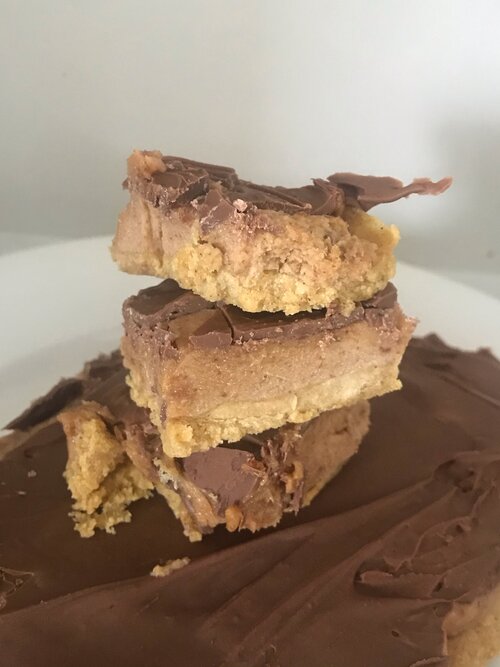
In a small bowl, add in all base ingredients and mix until a dough forms. Add in more flour or milk if you need a different consistency. It should hold together when pressed but not be too mushy.
Press the crust evenly into a slice pan.
In a food processor add in caramel ingredients and blend until smooth.
Add the caramel layer on top of the base and pop in the freezer.
Melt chocolate chips and pour over the top of caramel. Place in fridge/freezer. Once set, dip a knife in hot water and cut into small squares.
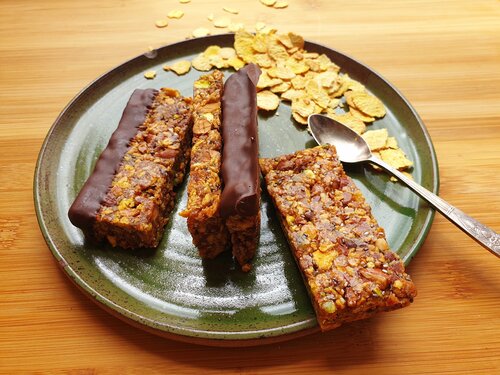
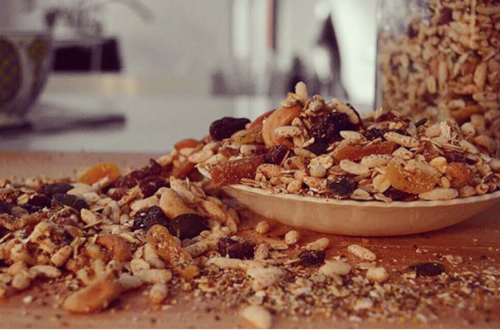
These toasted protein flake bars are made all the more delicious by roasting the nuts and, you guessed it, dipping them in chocolate! This recipe is based on one posted in the Don’t Call Me Brunch series by SBS Food.
100g Lupins for Life Toasted Protein Flakes
100g raw almonds
50 g raw pistachios
1 tbsp almond meal
1 tbsp chia seeds
⅓ cup crunchy peanut butter
¼ cup honey
175 g pitted dried dates
200 g 70% cocoa dark chocolate
1 tbsp coconut oil
METHOD
Preheat oven to 180°C. Line a 20 cm x 10 cm baking tray with baking paper.
Spread the Toasted Protein Flakes evenly onto a baking tray. These are already toasted, so you only need to pop them into the preheated oven for 5 minutes or until slightly more golden but not browned. Remove from oven and allow to cool.
Spread almonds and pistachios evenly onto a separate baking tray and bake for 10-12 minutes or until lightly golden. Remove from oven and allow to cool.
Place almonds and pistachios into a food processor and pulse until coarsely chopped. Combine Toasted Protein Flakes, almonds, pistachios, almond meal and chia seeds into a large mixing bowl, mix well.
Place peanut butter and honey into a small saucepan. Stir over low heat until peanut butter melts. Mix well and remove from heat and allow to cool for 5 minutes.
Place dates into a food processor and process until a thick paste forms.
Add dates and honey mixture to dry ingredients. Mix with a wooden spoon until well combined. Press mixture into prepared tin. Use the back of a dessert spoon to press themixture firmly into the baking tray. Refrigerate for 1 hour or until firm.
Break up the chocolate into chunks, and add it and the coconut oil to a non-stick saucepan. Stir over low heat until melted. Do not stop stirring or you’ll have a good excuse to eat the chocolate straight out of the saucepan!
Lift the bars out of the tray with baking paper, cut the bars down the length of the tray, and then cut into 14 bars.
Pour the melted chocolate into a flat container or tray, and dip each bar length-ways into the chocolate.
Store in the fridge. If they last long enough to store.
125g stick of salted butter, frozen (plus extra for greasing)
1 cup (100g) shelled walnuts, roughly crushed between your palms
Cream, custard or yoghurt to serve
METHOD
Preheat oven to 180°C.
Combine semolina, sugar, flour, cinnamon and salt in a bowl. Toss about to evenly distribute or use a wooden spoon if you must.
Peel, quarter, core and coarsely grate apples into a separate bowl, stirring through vanilla bean paste/extract and lemon juice to keep the apple from browning and adding to the juiciness.
Line the base of a 20/22cm springform cake tin and grease the sides (I like to use olive oil cooking spray, but you can use some extra butter for greasing). If you don’t have a springform cake tin, you could also use a pie dish and scoop this out as more of a crumble.
Take the butter out of the freezer and coarsely grate a third of it across the base of the cake pan. Gently encourage the grated butter into spots that don’t look as well covered.
Scoop out a cup of dry ingredients and sprinkle it across the bottom of the pan (yes, it will very likely look like the weirdest thing you’ve ever put in your cake tin). I like to twist the cake tin about in my hands to help distribute the dry ingredients evenly.
Then spread half the apple mixture on top of the dry ingredients layer.
Scoop another cup’s worth of dry ingredients and sprinkle over the top of the apple.
Grate another third of the butter on top (if it feels like it’s starting to melt, consider using some baking paper as a handle, or popping the butter back into the freezer for 15 minutes or so). If all this ‘layering’ talk has you confused, the order into the tin is: butter, dry, apples, dry, butter, apples, walnuts, dry, butter.
Spread the other half of the apple mixture on top of this. Arrange the crushed walnuts across this layer.
Sprinkle the rest of the dry ingredients on top. Finish with the last of the butter.
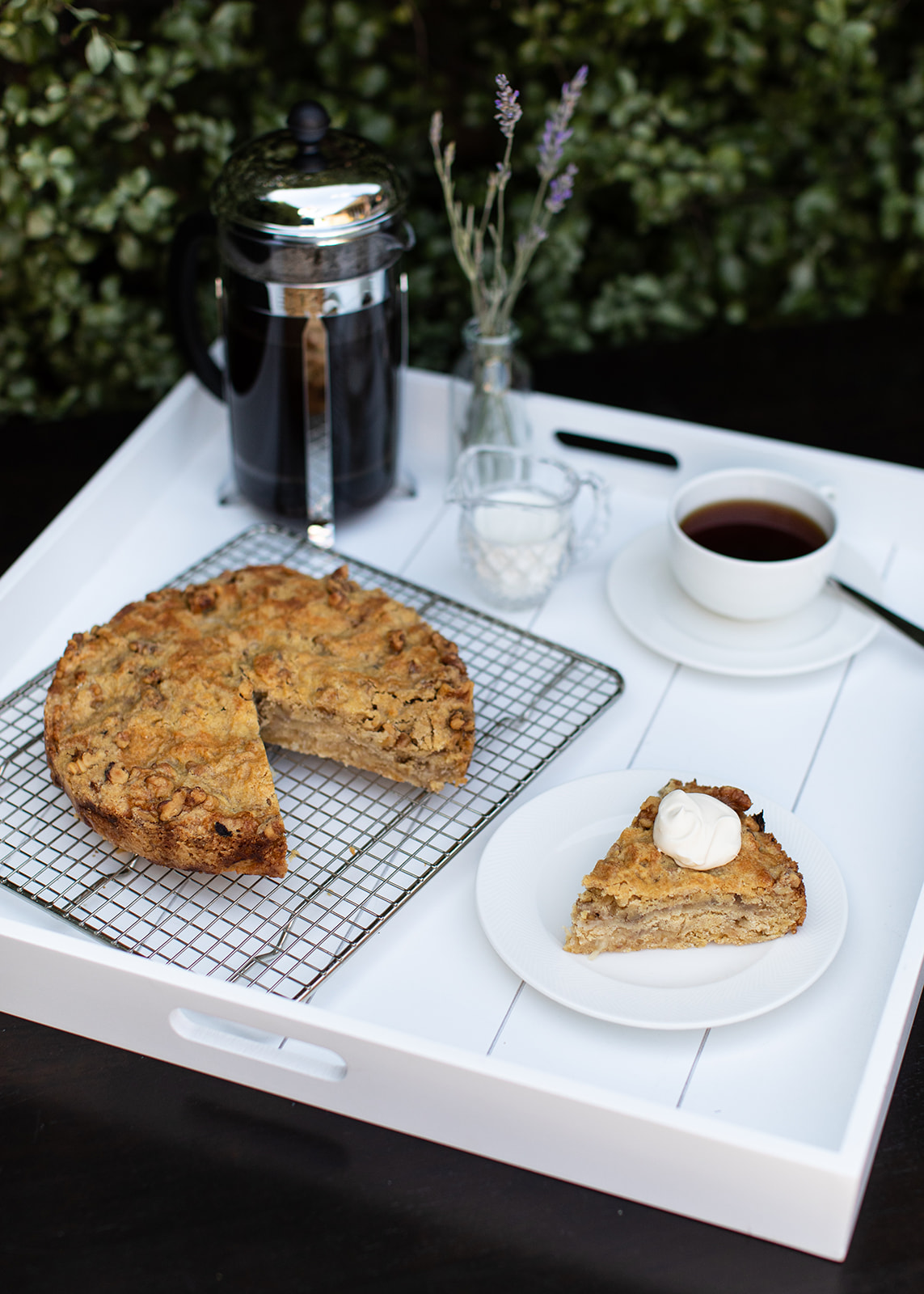
Pop onto a baking tray and bake for 30-35 minutes, until the top is slightly browned, just before the nuts begin to burn. For an oven that presents any trouble with uneven heat (like mine!), consider turning the cake tin 180 degrees and leaving it in the oven once it’s off for an extra 5 minutes to help even out the browning on top with residual heat.
Allow the cake to cool in the tin, then spring open and serve with cream or yoghurt. Prepare for it to be crumbly yet light, and for your guests to be amazed.
Chopped pistachio kernels and whipped cream to serve
METHOD
Place the water, sugar, lemon juice and rind in a small saucepan over medium heat and stir until the sugar dissolves. Increase heat to high and bring to the boil. Reduce heat to medium low. Simmer for 2 mins or until the syrup thickens. Set aside to cool.
Preheat oven to 180c. Brush a 20cm (base measurement) round non stick cake pan with butter to grease. Dust with flour. Place the pistachio kernels in a food processor and blend until finely ground.
Sift the flours, semolina and baking powder into a bowl until pale and creamy. Stir in the ground pistachio. Use an electric beater to mix the butter and sugar in a small bowl until pale and creamy. Add the eggs, one at a time, beating well after each addition. Transfer to a large bowl. Stir in the flour mixture. Add in the yoghurt and stir until well combined.
Spoon the mixture into prepared pan. Smooth the surface. Bake in oven for 50 minutes or until a skewer inserted in the centre comes out clean. Use the skewer to pierce boles all over the surface of the cake. Pour over the syrup, set aside to cool.
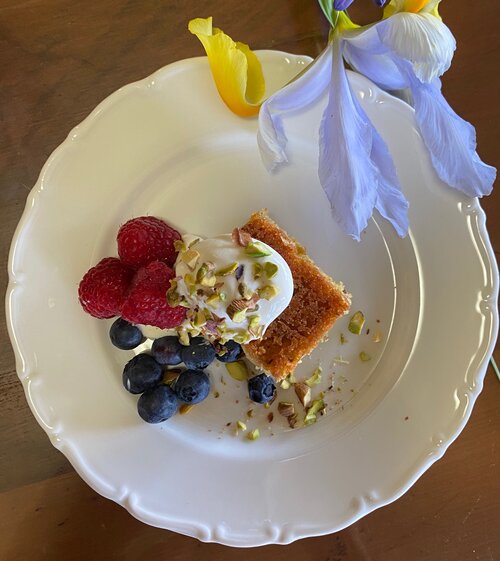
Transfer the cake to a serving plate and sprinkle with chopped pistachio. Serve with whipped cream.
Make the switch to Australia’s best tasting, 100% natural, protein and fibre rich products for a nutritional boost to all your favourite foods. Check out our range of products below.
TOASTED PROTEIN FLAKES
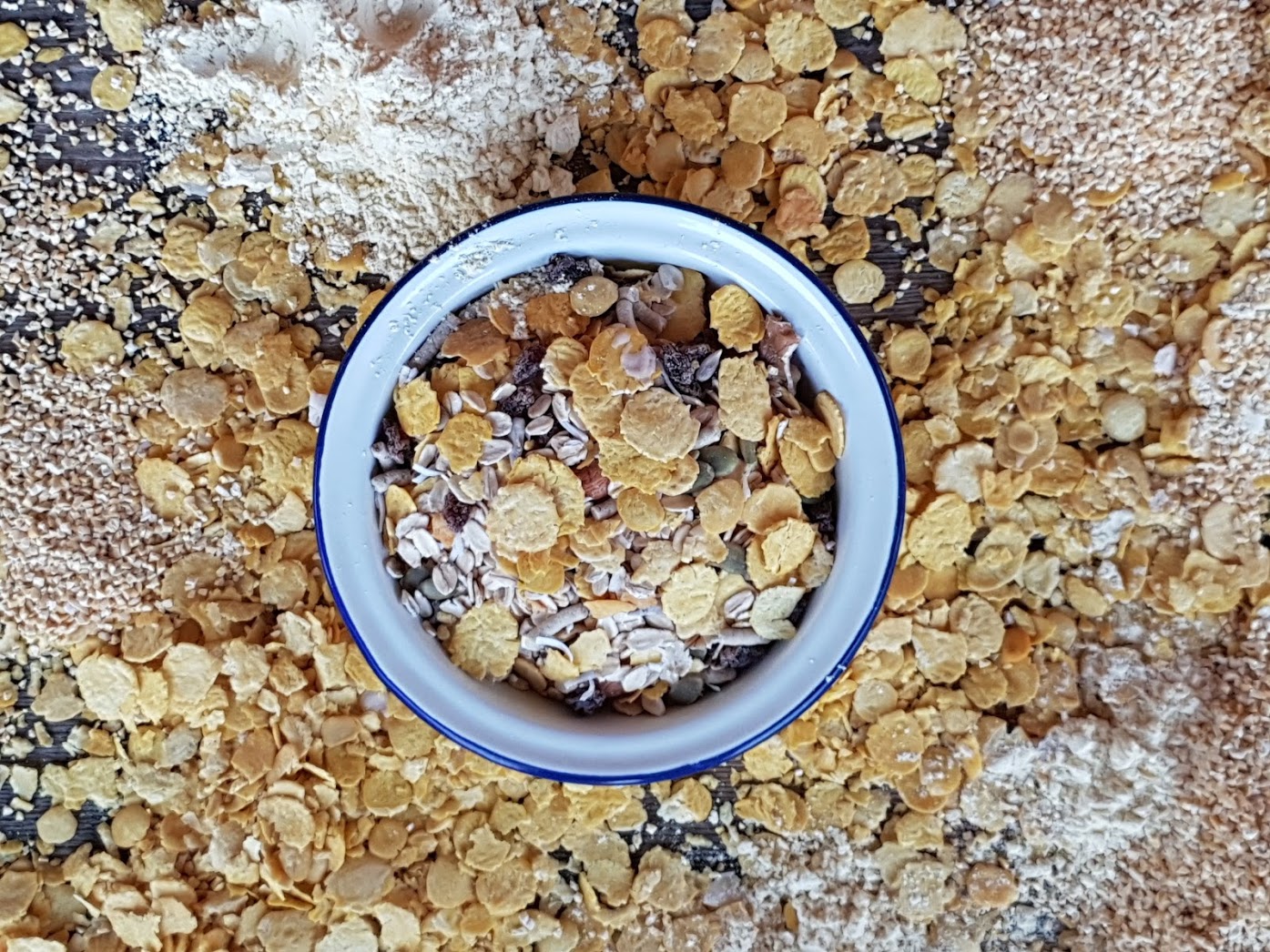
Our toasted PROTEIN FLAKES are a world first! We have spent the past four years developing this amazing new all-natural food.
Yes, it is 43% PROTEIN, nearly 30% FIBRE, very LOW CARBS, an amazing nutty TASTE – and is the perfect LOW GI way to start your day! For breakfast, simply add 25-30% toasted PROTEIN FLAKES to your muesli or other cereals or put it with yoghurt and fresh fruit. Add to salads for crunch or add to slices, biscuits and your favourite cakes.
Our toasted PROTEIN FLAKES are a PURE PLANT BASED PROTEIN made from 100% Australian sweet white lupins – a beautiful taste with the highest protein of any lupin available in Australia today!
Our flakes are a gluten-free product, though may contain traces due to the rolling process done offsite. They are GM free, rich in potassium, calcium and magnesium. Shop now
LUPIN FLOUR
Our lupin flour is made from 100% Australian sweet white lupins – beautiful taste and highest protein of any lupin flour in Australia today!
Our flour is gluten-free, low GI and GM free; rich in potassium, calcium and magnesium. Our nine-step milling provides a soft, consistent flour – the perfect alternative to plain flour or to blend with other flours to boost protein and fibre levels.
Sweet white lupin flour is an ideal inclusion for bread, biscuits, cakes, pasta and pastry, typically used at inclusion rates up to 40%, though with many cakes, slices and biscuits, our sweet white lupins can be used at 100% and still retain a great taste and texture! Shop now
Our wholemeal lupin flour is made from 100% Australian sweet white lupins – beautiful taste and highest protein of any lupin flour in Australia today!
Our wholemeal flour has 20% less carbohydrates, 10% more dietary fibre and 35% more calcium that our regular lupin flour – while still retaining nearly 39% protein. Like our other products, it is gluten-free, low GI and GM free; rich in potassium, calcium and magnesium. Our milling provides a soft, consistent flour – the perfect alternative to plain flour or to blend with other flours to boost protein and fibre levels.
Sweet white wholemeal lupin flour is an ideal inclusion for bread, biscuits, cakes, pasta and pastry, typically used at inclusion rates up to 40%, though with many cakes, slices and biscuits, our sweet white lupins can be used at 100% and still retain a great taste and texture! Shop now
LUPIN KIBBLE
Our lupin kibble is made from 100% Australian sweet white lupins – beautiful taste and highest protein of any lupin kibble in Australia today!
Our kibble is gluten-free, low GI and GM free; rich in potassium, calcium and magnesium.
For kibble – size is everything! Our unique process brings you the perfect size to blend with your rice, cooking in the same pot to provide a high protein, lower carb alternative to every rice dish.
Our kibble is ideal for a gluten-free alternative to couscous and tabouli, and provides texture and highlights in breads, biscuits and cakes, all while boosting protein and fibre levels. Shop now
LUPIN CRUMB
Our lupin crumb is made from 100% Australian sweet white lupins – beautiful taste and highest protein of any lupin crumb in Australia today!
Our crumb is gluten-free, low GI and GM free; rich in potassium, calcium and magnesium.
Our crumb is carefully sieved – tailored for customer requirements between 630 and 1500 micron to be exact – to bring you a protein and fibre rich crumb perfect for coating your meat, fish or vegetables.
It makes the perfect low-carb gluten-free tabouli or fine couscous and is great in dips and baked foods such as breads, biscuits and cakes. Shop now
LUPIN SEMOLINA
Here is the perfect gluten-free substitute for semolina. Sweet white lupins have long been used like semolina in the Mediterranean region and in the south of America to prepare pancakes.
As our sweet white lupins can cut either sweet or savoury, when your recipe calls for semolina flour, you now have an alternative that is not only gluten-free but rich in protein and fibre.
Like our other products, our “semolina” is low GI and GM free and rich in potassium, calcium and magnesium.
Our “semolina” is carefully sieved to between 350 and 630 microns – making it ideal for pastas, gnocchi and pizza, bread and biscuit doughs. Shop now
ANCIENT HISTORY AND THE 20TH CENTURY DOMESTICATION
Lupins have a history in agriculture and as a food that traces back more than 2000 years. They were eaten by the early Egyptian and pre-Incan civilisations and promoted by Roman agriculturalists for their role in soil fertility.
Lupins were moved from their Mediterranean origins to northern Europe by Frederick the Great of Prussia in 1781 to improve the poor soils of northern Germany. By the 1860s the ‘garden yellow lupin’ was widespread across the acid sandy soils of the Baltic coastal plain for forage and green manuring.
The early 20th century saw the first steps taken to turn the lupin from a wild or semi-domesticated form into a modern crop plant. This work was pioneered by German scientists who screened thousands of lupin plants. Their goal was to cultivate a ‘sweet’ variety. The bitterness (due to a mixture of alkaloids) is undesirable in animal feed and human food, and had prevented lupin’s widespread use for these purposes. The successful development of lupin varieties with the necessary ‘sweet gene’ paved the way for greater adoption of lupins in Europe and subsequently in Australia, where more sweet lupins are produced than anywhere else in the world.
OUR FIRST RESPONSE IS, “TOGETHER… HOW CAN WE MAKE THIS HAPPEN?”
We’ve all heard it said, “you have two ears and one mouth” with the point being that we should use them in that measure. Or, seek to understand and learn from others before you speak. This principle is CORE for us at Lupins For Life.
Our aim is innovating through collaborating with partners, clients and consumers, continually learning from others every step from the paddock to the plate.
As the world moves rapidly towards a diet that is plant-based, health-focused and – yes – creative and rich in flavour, each of us from the farmer to the chef or home cook has a part to play in making this a success.
Lupins For Life works hand-in-hand with food producers, both large and small, to develop fresh, healthy and great-tasting foods for their consumers.
So, what is it about Lupins For Life that makes this possible?
Our gluten-free, HACCP accredited custom facilities provide our partners with the opportunity to explore and trial lupin products that are not available off-the-shelf.
Our commitment to taking time with each of our partners to understand their consumers, their products, and their vision.
Direct contact with our central team – no one is farmed off to a state-based sales representative.
Our willingness to do things differently. In a rapidly globalising and changing environment, everyone has different expectations and dreams. Our first response is, “how can we make this happen?”
Innovation should always be coupled with what’s best for our environment. Lupins For Life has a Zero Waste Production Policy – our closed system where our lupins make their way to the consumer or return to the soil from where they came.